

Why Drawing From Observation Matters
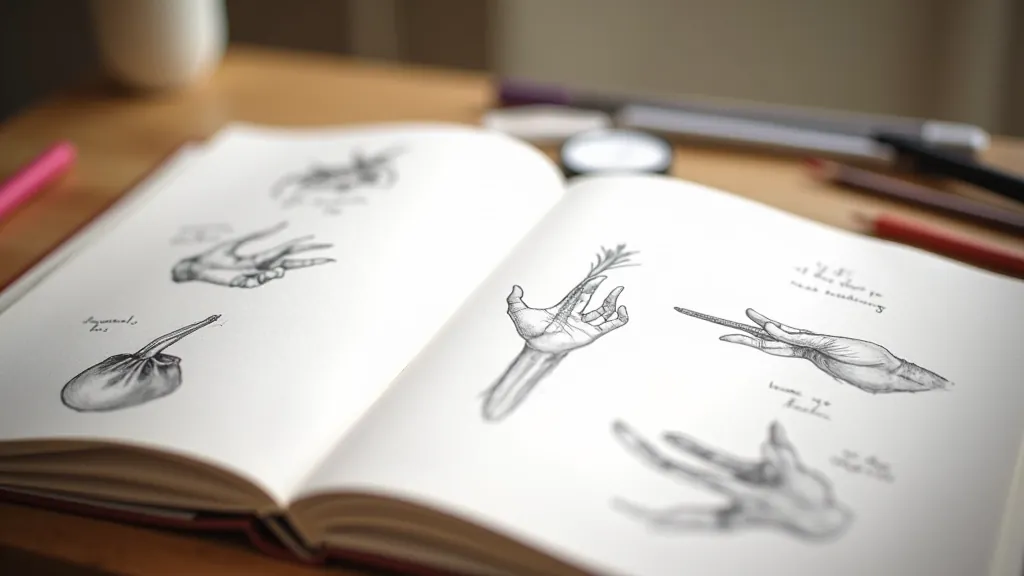
Drawing what you actually see — not what you think you see — is the foundation of every artist's skill. It sounds simple, but it's where most beginners struggle. Your brain tries to shortcut the process. You know a hand has five fingers, so you draw five fingers that look like sausages. You know a face has two eyes, so you plop them down symmetrically.
The real magic happens when you slow down and actually look. When you measure angles with your pencil. When you notice the weird proportions that make a face interesting. We're going to walk through this together with exercises that work. Most people see real improvement within 3-4 weeks if they practice consistently.


Start With Measuring and Proportions
Here's the first technique that changes everything: use your pencil as a measuring tool. Hold it at arm's length, thumb up. Close one eye. Line up the tip with the top of what you're drawing. Slide your thumb down until it matches the bottom. Now you've got the height.
Next, compare widths. Turn the pencil sideways and do the same thing. How many "pencil widths" is this object? How does the width compare to the height? A mug might be two-thirds as wide as it is tall. A face is roughly one-third as wide as it is long.
Pro tip: This isn't cheating. Professional artists do this constantly. It trains your eye to actually see proportions instead of drawing from habit. After a few weeks, you'll internalize these relationships and won't need the pencil trick anymore.
Understanding Light and Shadow
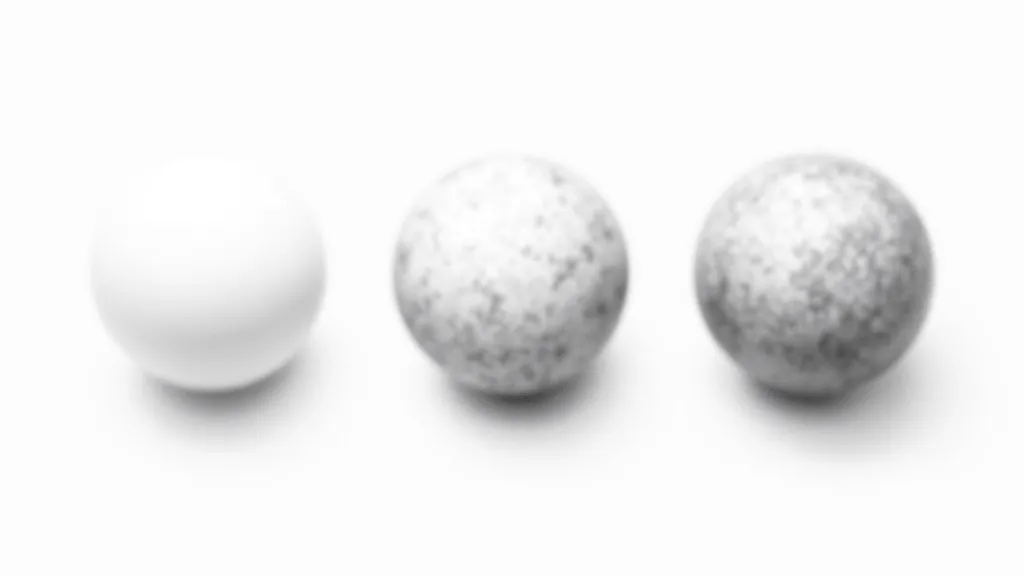
Once you've got the shape right, light and shadow bring it to life. Don't think about shading as covering the page with gray. Think about it as describing where the light is coming from.
Look at your object. Where's the brightest part? That's where light hits directly. Moving away from that, you'll notice a gradual shift. Then comes the shadow — the side turned away from the light. And here's what trips people up: shadows aren't black. They're usually a medium gray or brown, depending on what color your object is.
Start by identifying three zones: light, midtone, and shadow. Practice on simple objects — an apple, a cylinder, a cube. Spend 10-15 minutes on each. Don't worry about details. You're learning to see the structure that light reveals.
Three Exercises That Actually Work
These aren't boring drills. They're designed to retrain your brain to see instead of assume. Do one each day, 20-30 minutes. You'll notice your hand-eye coordination improving by week two.
Blind Contour Drawing
Pick an object. Look at it, not your paper. Draw its outline without looking down. Your hand might shake. Lines will be wobbly. That's perfect. You're forcing your eye to work instead of your brain's shortcut. Do this for 5-10 minutes daily. After two weeks, your contour lines will be steadier and more accurate.
Proportion Grid Study
Divide your page into a grid (2x2, 3x3, whatever). Divide your subject into the same grid. Draw what's in each square. This breaks down complex shapes into manageable pieces. It's not about being perfect — it's about training yourself to see angles and curves accurately instead of generalizing.
Five-Minute Sketches
Set a timer. Sketch the same object five times, getting faster each round. First round: slow, detailed, measuring everything. Fifth round: quick gesture drawing, capturing just the essence. This trains speed and confidence. Your muscle memory improves faster with repetition under time pressure.
Building Your Drawing Practice Routine
Consistency beats intensity. Fifteen minutes every day crushes two hours once a week. Your brain and hand need regular connection to improve. Set up a simple routine: 5 minutes warming up with blind contours, 10 minutes focused study of something specific, 5 minutes loose sketching for fun.
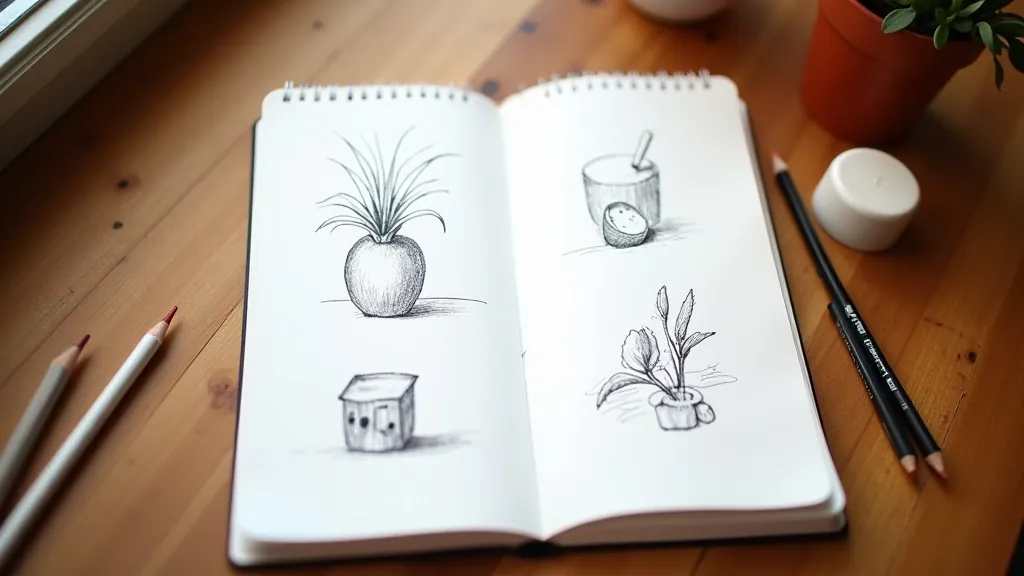
Keep a sketchbook. Not a precious "good art only" book. A working sketchbook where you experiment, fail, try again. The best artists have dozens of bad sketches for every good one. That's not a sign of weakness — it's how learning works. You're collecting visual information, building your mental library of how things actually look.
Continue Your Learning

Your Next Step
Sketching fundamentals aren't complicated. You're learning to see. That's it. Measure proportions. Understand light. Practice consistently. Do this and you'll improve faster than you'd expect. Most people who stick with these exercises for a month are amazed at their progress. You will be too.
Start with one object today. Spend 20 minutes observing and drawing it. Don't judge the result. Just notice what you learned. That's how this works. One sketch at a time, your eye gets better. Your hand gets steadier. Your confidence grows. This is the path that every artist walks, and you're starting it right now.
About This Guide
This article is educational material based on foundational drawing techniques taught in art education. The exercises and methods described are general guidance meant to support your learning journey. Results vary depending on individual practice frequency, dedication, and prior experience. Drawing skill development is personal and non-linear — some concepts click quickly while others take time to internalize. We encourage you to adapt these techniques to your own pace and learning style. If you're working with a professional art instructor, discuss these methods to see how they complement your formal training.